Saturday, November 20, 2010

One of My Cover Obsessions

Glowing skeletons or skeletons that were on fire have always managed to grab my attention.  This 1977 Amazing Spider-Man cover is just one example.  I loved this issue as a kid.  Dinosaur skeletons and Stegron?  Sign me the hell up.


The mid-to-late '70s covers for this series were always pretty good, but this one really stood out for me, and I wasn't a huge Spider-Man fan.


Another cover that had me grabbing the book is this one from Detective ComicsThis isn't a pure skeleton, but it is close enough.  Comparing the two shows some similar color themes and composition.  The hero, at the mercy of a fiery skeleton seems to be symbolic for the hero's death, which is always a way to catch a potential consumer's eye.  We all know it's a ploy, but you can't help but want to know what the hell is going on.


If you liked flaming skeletons, you couldn't help but be a fan of Ghost Rider.  A flaming skull.  A flaming motorcycle.  If you were male, that was damn cool.  (I imagine a few females liked it to.)  Johnny Blaze, the Ghost Rider from my youth, was motorcycle stunt rider (cool job) who turned into this flaming skull superhero (cool idea) and fought guys with like the one who had a giant eyeball for a head (not cool at all).

With Ghost Rider you no longer had to wait for your favorite cover to have a flaming skeleton character.  You got it every month in the form of Marvel's own supernatural hero.  Oddly enough, I was a huge Ghost Rider fan.

Most people remember whatever decade they got into comic books as being the best decade in the industry's history.  I got into them in the 1970s, though I would not call that the industry's best.  It was, however, the decade of some of the best freakin' covers.  These flaming skulls and skeletons are just a small part of it.  The covers were more dynamic than anything you see now even.  Don't believe it?  Look at the Ghost Rider cover to the right, and then compare it to the one from the 1990s below this.
It's a passable cover, but it lacks the dynamics of the three previous ones.  Yes, the concept is still kind of cool, but it doesn't scream, "Read me."

We'll never see an era quite like the 1970s when it comes to comic covers again.  And while the concept is still being used, it lacks the excitement these covers had decades ago.  It's a shame, too, because if these covers still had the same visual punch, perhaps there'd be more readers today.

Tuesday, November 9, 2010

Secret Avengers Revisited

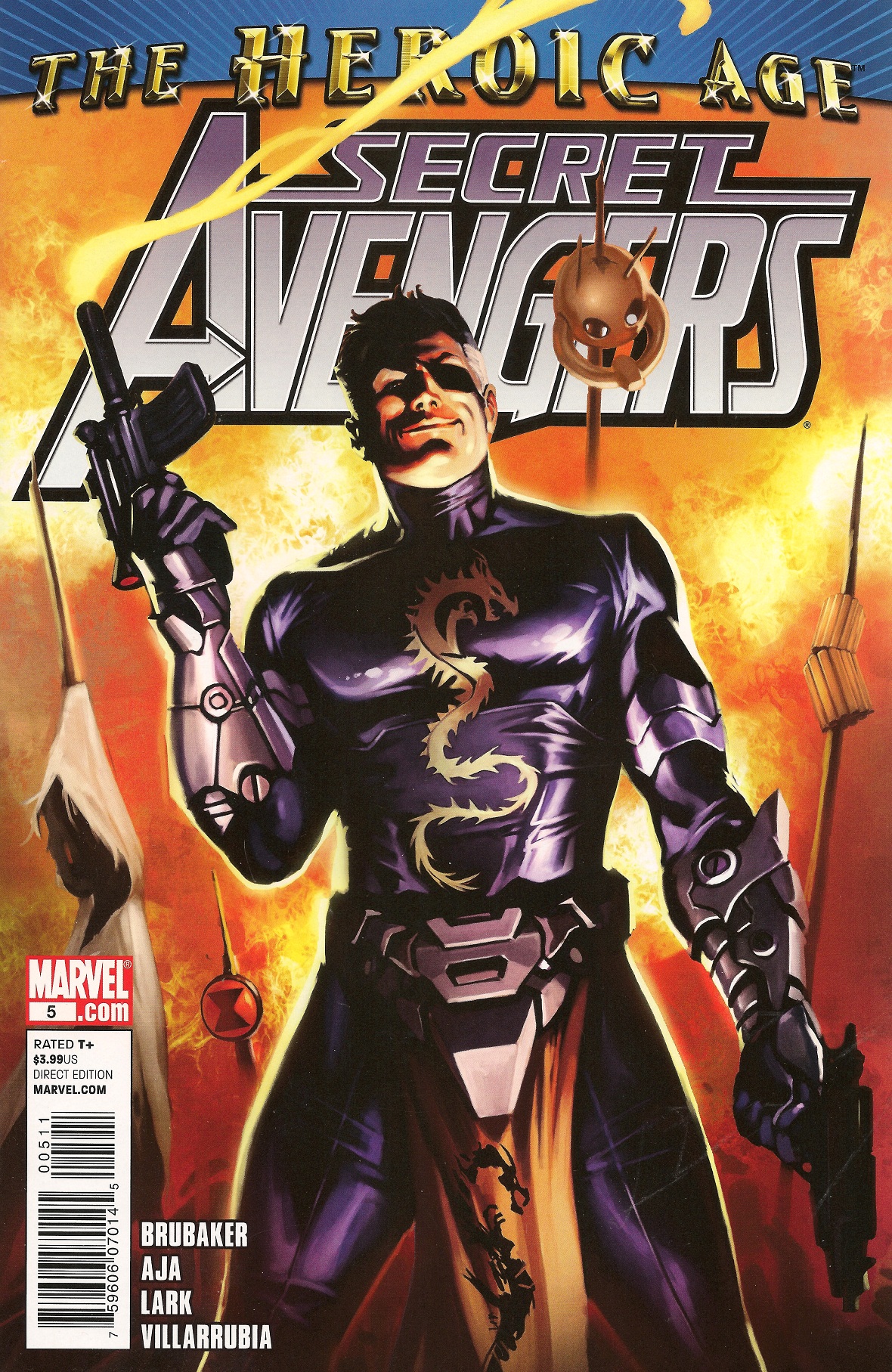
A few posts back I wrote about my disappointment with Marvel's new Secret Avengers title.  One of the things that bothered me, which I don't think I mentioned, was the Nick Fury character.  I couldn't understand why he was acting the way he was in the story as it seemed totally out of place.  Granted, I don't keep up with all the events in the Marvel universe, but it seemed odd.  Issue five cleared all that up and has redeemed the series for me.

Titled "The Secret Life of Max Fury," this stand-alone issue explains (maybe -- you know how these things go) just why Mr. Fury seemed to be acting out of character these past few issues.  In fact, the story goes back about ten years to explain these things.  And while it was no action-packed fisticuff orgy, it was a highly interesting story (which some totally fitting art by David Aja, who is fast becoming one of my favorites) of intrigue and suspense that sets the stage for future stories that seem like they could be incredibly promising.  At this point I'm glad I gave the book a chance, as I get the feeling I would be missing out on some prime Avengers stories had I dropped it.

Of course, everything could go wrong and writer Ed Brubaker could be replaced for some reason and all his storylines handed to an intern.  That would be disaster, but we all know things like that happen in the world of comics.  Hopefully, for the sake of this title's fans, that won't be the case here.

Sunday, October 31, 2010

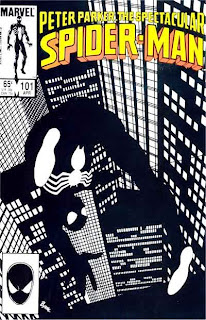
Cover Review: Peter Parker, The Spectacular Spider-Man #101

If you take out this comic's title, you are left with a simple, yet dynamic black and white cover that catches the eye and doesn't let go.

The covers for this series were typically full of action and usually centered on Spider-Man and whatever villain he faced that issued.  This cover goes the more artistic route, and in doing so may have attracted more glances than the other titles surrounding it on the rack at the time. 

The year was 1985, and John Byrne was the cover artist.  This is obviously before his artistry went totally south. 

If you're looking at the cover trying to figure out what doesn't look quite right, you wouldn't be alone.  At first you are taken in by the excellent lack of color, but the more you stare at it the more something seems off.  It's the buildings, and it's brilliant.

The layout of the buildings makes no rational sense.  If this were a photograph, it would be doctored, as there is no place where buildings would be laid out like this.  It's almost reminiscent of Germany's own Expressionist masterpiece The Cabinet of Dr. Caligari.

Byrne wasn't going for realism.  Here he was using pure art.  He was playing with the standard poses readers were used to seeing Spider-Man in, and then he used the black costume and made something that could easily grace a museum's wall.  Imagine if he had done the same thing in red and blue using Spider-Man's standard costume.  It would not have worked.

I've given Byrne plenty of flack in my writing, but I will admit that with this cover he shines.  Would it have made me pick up the book to read?  No, but it would've caught my eye, and it still does.  In a series that had few truly memorable covers or moments, this one stands out, and it's all due to Byrne.

Wednesday, October 27, 2010

The Walking Dead on AMC

The Walking Dead television series has its Halloween debut on AMC.  As I'm sure most of you reading this know, it is based on an Image comic book series.

I've been asked by a hell of a lot of people if I am going to watch this.  The basic line of questioning goes something like this, "It's from a comic book.  It's got zombies.  You like both things.  You gonna watch?"

Probably not.

I never read the comic book despite the generally positive reviews.  I simply had no interest in it.  Mistake?  Maybe, but I'm still not going out of my way to get it.

I also don't watch a hell of a lot of episodic television.  I don't find myself having enough time to do that, and if I were going to, I would actually go to the source material first (in this case the comic or trade paperbacks).  It's not like it is impossible to find.  Don't misunderstand me -- I'm fairly sure the show will be worth watching.  I just don't plan on being one of the audience members.  If I come across it, I'll probably tune in, but I doubt I'll even have the television on at that time.

What I'd love to see is the people who are excited about the television series actually becoming comic book readers.  By all accounts (though not mine), the industry is dying.  That means all these incredible franchise ideas will have to come from elsewhere -- something Hollywood has never been really good at doing.  (Outside of the Star Trek and Star Wars franchises, I can't think of too many franchises that have solely been the creation of the movie/television industry.  James Bond came from books, as did Harry Potter.)

It seems doubtful that all these viewers will turn into readers, but if I were a comic book store or publisher (that means you, DC and Marvel) I'd be taking out ads in order to expose potentially new readers to what you have to offer. 

In the meantime, I'll continue to field the questions, reminding people of the television show's source material.  And that material is always going to be better than what can be shown on the screen.

Tuesday, October 19, 2010

Dirty Deeds Done Dirt Cheap

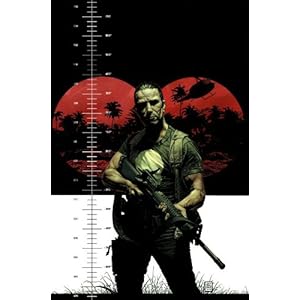
Any good Garth Ennis tale (and by extension that includes artist Steve Dillon) will involve topics like honor, truth and justice ... along with a healthy dose of bullets to the head and jaws blown off.  Such is the nature of the 2003 Punisher story arc called "Brotherhood."

Originally presented in the Marvel Knights imprint of The Punisher, the three issue story is about cops gone bad, coke deals gone bad, priests gone bad, domestic violence (already bad) and how the world views someone based on the actions of a few bad apples.  Frank Castle (Punisher) has vowed to never cross the line and kill a cop, but the two cops he runs into push him to the very edge.  Their addictions have mired them in a world of wife beating, gambling and stealing evidence.  When Castle enters the picture, the cops' world is already spiraling out of control and people are dying.

Before this was a Max title, The Punisher had to watch the language and nudity (nobody really worried about the violence), so this isn't as nasty as it could be.  It still makes its point without the use of words you'd normally find in this sort of tale.  That is the mark of a good group of storytellers, which as we know from Preacher, is exactly what Ennis and Dillon are.

Marvel's 2003 universe is far different from the one of the past few years, and this was its darkest title at the time.  Oddly enough, it was also its most realistic.  If you take the Punisher out of the equation, most of what the creators did was from real life, whether it be drug deals or IRA terrorism.  It was a far cry from the X-Men or Spider-Man, and for that I appreciated it.

"Brotherhood" will never be considered a classic tale.  With Ennis and Dillon, everything they do is grand, but to standout at this point it really needs to be spectacular.  It will, however, be a prime example of a strong tale that will never age.  Someone reading this ten years from now will recognize the themes and issues at hand, and they will in no way be alien to the reader.  Try saying that about some of the other stories we've witnessed as of late.  You can't.  And three issues was all it took.  Concise, but with about three times the dialogue of your average current comic, and well-paced.  It may not be a classic, but it should be studied.

Friday, October 8, 2010

Steve Rude Selling Original Art to Avoid Home Foreclosure

I'm not a huge Steve Rude fan (Nexus), but will admit that he has a place in comics history.  Unfortunately, the banks don't respect that, and now, in an effort to keep his home he is selling his original art on eBay.  You can click here to see it.

I think original art is a good investment, but I only buy stuff from artists whom I happen to enjoy.  If you are a fan of Rude, I'd recommend at least checking this out.  In an age where people think artists deserve nothing for their trouble (with the concomitant outcomes when your revenue is taken away), giving something back is a great way to show your appreciation ... especially if it keeps someone from being homeless.

Tuesday, October 5, 2010

Wonder Woman Needs Your Help!

I'm not going to reprint my entire piece here, but Jennifer Wenger, an incredibly talented actress, is making a push for the role of Wonder Woman in the upcoming television series.  If you are at all interested, just click here to read the piece on my other blog. 

I posted the main piece there because, quite frankly, more people read that blog than they do this.