That man to your left? The guy wearing the bondage mask and holding up sign asking if Public Spirit is a rapist? That's Marshal Law. In 1987 Pat Mills and Kevin O'Neill introduced him to the world through Epic Comics.
For me it was love at first sight. Bondage gear goes a long way with me, I guess. That and barbed wire wrapped around the arm and a job that involves hunting heroes didn't hurt any either. It was dark, funny stuff that was the antidote for titles like Web of Spider-Man.
The character has jumped from company to company and cross-over to cross-over. Original output has been pretty scarce, however. Perhaps it was too dark. Perhaps it was because it poked fun of many sacred comic book icons. Or maybe it was the cross-overs. It doesn't really matter. The stories have all but stopped, and that's a shame for the fans of this character.
Marshal Law is no Superman, Batman, Spider-Man or even Iron Man. That said, he is unforgettable. His unapologetic way of dealing with the heroes he has had to go up against sets him apart from most of the pack. His costume also does the same. Just looking at him is painful. He needs a regular book, and he needs it now.
Until that day comes, I have my back issues ... and violent, violent memories.
Thursday, February 10, 2011
Sunday, January 23, 2011
X-Men #5 Revisited: Merry Marvel Madness of the Worst Sort
If your only knowledge of the X-Men comes from the three movies and the current run of comics, you may not realize that the title, which started in the 1960s is far different from what you read today. The core team of Marvel Girl, Angel, Beast, Cyclops and Iceman didn't really come to their own until issue five, when they graduated Professor Xavier's final exam of sorts.
X-Men, as the series started off before becoming Uncanny X-Men, was not always popular, and it wasn't always good, either. Issue five, which was written by Stan Lee and illustrated by Jack Kirby, found the heroes battling Magneto, Mastermind, Scarlet Witch, Quicksilver, and Toad on Asteroid M in order to get back a kidnapped Angel. At this point in the history of the title, Quicksilver and Scarlet Witch were not known to be Magneto's children. Professor Xavier, who was injured last issue, did not join his students on their mission because he was said to have lost his mental powers from that injury. Of course, typical to Professor Xavier, that was all a lie.
Professor Xavier, as has been said in the past, was a jerk. At that time he was a pompous, stern taskmaster who hid a secret love of Marvel Girl (very disturbing), and commanded his students to be at his side within a set number of seconds lest they get demerits. Lying about losing his mental powers was not out of character. Using that lie to cause the team to go into space and almost losing teammate Cyclops all under the guise of a final exam doesn't seem that out of place, either. And in hindsight, looking at what the X-Men were to face throughout the decades, it is a thoroughly acceptable final exam of sorts, but taking this into story at its face value at the time, it seemed a bit harsh even for the professor.
By the time this issue hit the spinner racks, the X-Men title was far from the two-dimensional work coming out of DC. Marvel was known for characters with problems, and these first five issues proved no exception. What stands out the most, and is moved forward here, is the plight of Quicksilver and Scarlet Witch. They have joined sides with the evil Magneto, not because they share his views, but because Magneto saved Scarlet Witch's life. The loyalty the two siblings (Quicksilver and Scarlet Witch are established as brother and sister) have toward the master of magnetism is tested throughout issues four and five, and when Cyclops makes a plea to Quicksilver in this issue to switch sides, you can understand Quicksilver's conflicting feeling (as well as buy his explanation why he won't turn traitor to Magneto). Such character development, however rudimentary it was, happened to be standard in Marvel's output at the time. DC eventually played catch-up, and now it is status quo for most of the comics industry.
Reading this when it came out in the Sixties must have been a heck of an experience. The plot twists we take as mandatory today weren't not the norm. Villains were not typically so conflicted. (And like most things, the villains are far more interesting than the heroes in this issue.) It was probably senses-shattering to a young reader, and felt edgy to an older reader. Unfortunately, it still has its flaws.
The contrived way in which Magneto uses Toad to help capture/trick the X-Men is flawed thinking at its best. Toad, in disguise, somehow enters a live, televised track meet (this plan was apparently put together at the spur of the moment, so I'm not sure how this would be possible) that just happens to be watched by the X-Men on television at their academy. I don't know how Magneto would know the heroes would be watching, but his logic was apparently spotless, as the X-Men crashed the track meet after the crowd became unruly. As far as grievances go, this is a fairly major one as the entire plot hinges on it. Magneto apparently just wanted to find the X-Men's "secret" location, and once Toad's identity was made, he and his evil henchmen stepped in to save him, capturing Angel in the process. The capture of Angel was not the crux of the plan, but it became an added bonus that inadvertently led the X-Men to Magneto's secret base of operations. In other words, a plan that should have never worked in the first place because it was built too much about random happenstance, actually ended up working the exact opposite of how the criminal mastermind envisioned it. This is poor storytelling, though it does make for a grand adventure.
Having what is otherwise a solid story rest upon such a flimsy foundation denigrates the entire work. It is fine for moving the action along, but as soon as you start to think about it, it falls apart. So does the X-Men graduating.
Did Professor Xavier somehow know this was going to happen? He had taken himself out of the mix the previous issue. How long would he have kept his "lost" powers a secret? Would they have returned had the threat been minor? Or did he suspect Magneto would attempt something fairly quickly? We don't know because the readers were kept in the dark to the professor's plans the entire time. We know now they came back, but the readers who delved into this issue when it first came out had no idea that was going to occur. For all they knew, he would remain powerless forever. Again, a major plot point (the X-Men graduating) hinged upon uncontrollable circumstances ... or at least that is how it seems.
Stan Lee and Jack Kirby are considered masters. Their influence upon comic books is not even a subject of debate. Lee is not, despite the accolades, a master writer. He is the George Lucas of comic books -- a man with great ideas that are often poorly executed. Kirby, however, is deserving of all the praise. If this issue were to be presented as something new in 2011, however, it would not pass muster. Even Kirby's art is subdued for this issue. Considering the time period when it came out, it is a thoroughly enjoyable read ... as long as you don't think about the plot too much.
X-Men, as the series started off before becoming Uncanny X-Men, was not always popular, and it wasn't always good, either. Issue five, which was written by Stan Lee and illustrated by Jack Kirby, found the heroes battling Magneto, Mastermind, Scarlet Witch, Quicksilver, and Toad on Asteroid M in order to get back a kidnapped Angel. At this point in the history of the title, Quicksilver and Scarlet Witch were not known to be Magneto's children. Professor Xavier, who was injured last issue, did not join his students on their mission because he was said to have lost his mental powers from that injury. Of course, typical to Professor Xavier, that was all a lie.
Professor Xavier, as has been said in the past, was a jerk. At that time he was a pompous, stern taskmaster who hid a secret love of Marvel Girl (very disturbing), and commanded his students to be at his side within a set number of seconds lest they get demerits. Lying about losing his mental powers was not out of character. Using that lie to cause the team to go into space and almost losing teammate Cyclops all under the guise of a final exam doesn't seem that out of place, either. And in hindsight, looking at what the X-Men were to face throughout the decades, it is a thoroughly acceptable final exam of sorts, but taking this into story at its face value at the time, it seemed a bit harsh even for the professor.
By the time this issue hit the spinner racks, the X-Men title was far from the two-dimensional work coming out of DC. Marvel was known for characters with problems, and these first five issues proved no exception. What stands out the most, and is moved forward here, is the plight of Quicksilver and Scarlet Witch. They have joined sides with the evil Magneto, not because they share his views, but because Magneto saved Scarlet Witch's life. The loyalty the two siblings (Quicksilver and Scarlet Witch are established as brother and sister) have toward the master of magnetism is tested throughout issues four and five, and when Cyclops makes a plea to Quicksilver in this issue to switch sides, you can understand Quicksilver's conflicting feeling (as well as buy his explanation why he won't turn traitor to Magneto). Such character development, however rudimentary it was, happened to be standard in Marvel's output at the time. DC eventually played catch-up, and now it is status quo for most of the comics industry.
Reading this when it came out in the Sixties must have been a heck of an experience. The plot twists we take as mandatory today weren't not the norm. Villains were not typically so conflicted. (And like most things, the villains are far more interesting than the heroes in this issue.) It was probably senses-shattering to a young reader, and felt edgy to an older reader. Unfortunately, it still has its flaws.
The contrived way in which Magneto uses Toad to help capture/trick the X-Men is flawed thinking at its best. Toad, in disguise, somehow enters a live, televised track meet (this plan was apparently put together at the spur of the moment, so I'm not sure how this would be possible) that just happens to be watched by the X-Men on television at their academy. I don't know how Magneto would know the heroes would be watching, but his logic was apparently spotless, as the X-Men crashed the track meet after the crowd became unruly. As far as grievances go, this is a fairly major one as the entire plot hinges on it. Magneto apparently just wanted to find the X-Men's "secret" location, and once Toad's identity was made, he and his evil henchmen stepped in to save him, capturing Angel in the process. The capture of Angel was not the crux of the plan, but it became an added bonus that inadvertently led the X-Men to Magneto's secret base of operations. In other words, a plan that should have never worked in the first place because it was built too much about random happenstance, actually ended up working the exact opposite of how the criminal mastermind envisioned it. This is poor storytelling, though it does make for a grand adventure.
Having what is otherwise a solid story rest upon such a flimsy foundation denigrates the entire work. It is fine for moving the action along, but as soon as you start to think about it, it falls apart. So does the X-Men graduating.
Did Professor Xavier somehow know this was going to happen? He had taken himself out of the mix the previous issue. How long would he have kept his "lost" powers a secret? Would they have returned had the threat been minor? Or did he suspect Magneto would attempt something fairly quickly? We don't know because the readers were kept in the dark to the professor's plans the entire time. We know now they came back, but the readers who delved into this issue when it first came out had no idea that was going to occur. For all they knew, he would remain powerless forever. Again, a major plot point (the X-Men graduating) hinged upon uncontrollable circumstances ... or at least that is how it seems.
Stan Lee and Jack Kirby are considered masters. Their influence upon comic books is not even a subject of debate. Lee is not, despite the accolades, a master writer. He is the George Lucas of comic books -- a man with great ideas that are often poorly executed. Kirby, however, is deserving of all the praise. If this issue were to be presented as something new in 2011, however, it would not pass muster. Even Kirby's art is subdued for this issue. Considering the time period when it came out, it is a thoroughly enjoyable read ... as long as you don't think about the plot too much.
Sunday, January 16, 2011
Marvel's Battlestar Galactica
Being a Marvel fan, a sci-fi fan, and a fan of the Battlestar Galactica television series (the original one that ran on ABC), it's not surprising that I picked up a copy of Marvel's comic book series. I only ever had two issues of it that I can remember (and one of those was gotten in trade with my brother), but I distinctly remember not liking it.
The only other sci-fi comic I was reading at the time was Star Wars, also from Marvel, and I loved that one. That comic had everything I would expect from a comic book based on the series, while the Battlestar Galactica one just seemed boring.
Looking back on it, remembering what I did of the television series, I always found the ideas more interesting than the characters, which is almost exactly the opposite way I feel about Star Wars. I remember Battlestar Galactica as a stale read, and that is what kept me at so few issues. Marvel only did 23 regular issues, so it seems I wasn't the only one who felt this way. Apparently an ending to the series had always been envisioned by Marvel, but I would imagine that if sales were strong enough Marvel would have kept the title afloat, as the company has never been one to turn down money. Star Wars as a means of comparison, ran 107 issues with three annuals. That doesn't even count the four-issue limited series for Return of the Jedi.
The Marvel series has its supporters, as does any sci-fi franchise, and other companies have brought Battlestar Galactica to a comics format since. I've tried to read some of the stuff from Maximum Press but found it impossible to get into.
Someday I may actually revisit the Marvel series and see if my mind has changed on it. For the moment, however, there are far too many other titles begging for my attention, and I'm fairly confident I'll be able to pick up this entire series at bargain prices for some years to come.
The only other sci-fi comic I was reading at the time was Star Wars, also from Marvel, and I loved that one. That comic had everything I would expect from a comic book based on the series, while the Battlestar Galactica one just seemed boring.
Looking back on it, remembering what I did of the television series, I always found the ideas more interesting than the characters, which is almost exactly the opposite way I feel about Star Wars. I remember Battlestar Galactica as a stale read, and that is what kept me at so few issues. Marvel only did 23 regular issues, so it seems I wasn't the only one who felt this way. Apparently an ending to the series had always been envisioned by Marvel, but I would imagine that if sales were strong enough Marvel would have kept the title afloat, as the company has never been one to turn down money. Star Wars as a means of comparison, ran 107 issues with three annuals. That doesn't even count the four-issue limited series for Return of the Jedi.
The Marvel series has its supporters, as does any sci-fi franchise, and other companies have brought Battlestar Galactica to a comics format since. I've tried to read some of the stuff from Maximum Press but found it impossible to get into.
Someday I may actually revisit the Marvel series and see if my mind has changed on it. For the moment, however, there are far too many other titles begging for my attention, and I'm fairly confident I'll be able to pick up this entire series at bargain prices for some years to come.
Tuesday, January 4, 2011
Superman Registers on Megan's Law Website
I like Action Comics. I really do. It is an iconic title. The first appearance of Superman? What could be more iconic? So, you can imagine my horror upon stumbling upon this cover when I was doing research on a piece about the iconic series.
Superman, taking off his shirt. Clark Kent glasses pushed up on his forehead. Too busy to take them off. He's got work to do. Work in the form of ...
Young Timmy (that looks like it would be his name). On his stomach. On his bed. Tears moistening his pillow.
What the hell was the editor thinking? Is this a joke? I've seen some strange comic book covers before, but this really takes the cake. "In This Issue: Superman Battles His Inner Demons!"
I don't own this issue. Someday I will possibly track it down to add to my collection. I'm fairly sure the tale inside is far less menacing than the cover. I really have to question the mindset of anyone who gave this the okay, though. There is no era "innocent" enough where this could come out looking fine. Superman, no matter the decade, looks like a child molester.
Supes, as the kids he doesn't molest call him, has never been a favorite of mine. He's always been a little too clean cut ... or so I thought. Had I known the man who stands for truth, justice and the American Way had more in with NAMBLA I would have found him less clean cut but far more creepy.
Makes you sort of wonder what the hell happened to Jimmy Olsen, doesn't it?
Superman, taking off his shirt. Clark Kent glasses pushed up on his forehead. Too busy to take them off. He's got work to do. Work in the form of ...
Young Timmy (that looks like it would be his name). On his stomach. On his bed. Tears moistening his pillow.
What the hell was the editor thinking? Is this a joke? I've seen some strange comic book covers before, but this really takes the cake. "In This Issue: Superman Battles His Inner Demons!"
I don't own this issue. Someday I will possibly track it down to add to my collection. I'm fairly sure the tale inside is far less menacing than the cover. I really have to question the mindset of anyone who gave this the okay, though. There is no era "innocent" enough where this could come out looking fine. Superman, no matter the decade, looks like a child molester.
Supes, as the kids he doesn't molest call him, has never been a favorite of mine. He's always been a little too clean cut ... or so I thought. Had I known the man who stands for truth, justice and the American Way had more in with NAMBLA I would have found him less clean cut but far more creepy.
Makes you sort of wonder what the hell happened to Jimmy Olsen, doesn't it?
Friday, December 31, 2010
The New Mutants
The issue pictured at left, The New Mutants #16 was my first issue of the first true spin-off of the X-Men franchise. I found it on a spinner rack at a PA Laneco store, where I happened to buy a lot of my comics at the time. Looking at the cover, and knowing my tastes at the time, it's easy to see what attracted me to it.
First was the use of the word "mutants." The X-Men were mutants, and I liked them, so it seemed a natural I would give this a try. Then there were the characters.
Two animal-like creatures. One guy who was all black with spots around him. A guy with a jet pack. A woman who looked like she was made of lava. Kitty Pryde. I'm sure my young mind asked, "What the hell is this?" So I grabbed it, (most likely) paid for it, and marched my butt home to read it.
I was hooked.
Eventually I got all the issues of the series. Many were great (the Demon Bear saga artwork alone). Some were horrible (Bird-Brain, or whatever the hell he was called, comes to mind). The team dynamics were firmly in place by this issue, and while Pryde may have thought of the newbies as "X-Babies," it was clear these cats could hold their own. In fact, the issue I first picked up featured a battle with the Hellfire Club's own young ones, and I seem to recall it being fairly brutal.
The series has been revamped a couple times since it first ended. I don't think the revamps have ever been as good, however. They lack a certain spark and freshness, which is kind of to be expected when you think about it. When this title first came out, X-fever had not totally overtaken the industry yet, and the idea of a new group of mutants emerging as a powerhouse was a unique concept in the Marvel universe. Their age guaranteed the problems would be different, and their lack of skill gave it the feeling that anything could happen at any time. (Magneto taking over their training and introduction of Cable come to mind.)
If Marvel is intent upon dominating all media, as it seems to be, the concept of the New Mutants could make for a good television show or even a movie (if handled properly). Not that I'd watch it, as I think most of the comic book properties that have floated over to TV and the silver screen have been lacking, but I think the teen and older child market would have a field day with it.
First was the use of the word "mutants." The X-Men were mutants, and I liked them, so it seemed a natural I would give this a try. Then there were the characters.
Two animal-like creatures. One guy who was all black with spots around him. A guy with a jet pack. A woman who looked like she was made of lava. Kitty Pryde. I'm sure my young mind asked, "What the hell is this?" So I grabbed it, (most likely) paid for it, and marched my butt home to read it.
I was hooked.
Eventually I got all the issues of the series. Many were great (the Demon Bear saga artwork alone). Some were horrible (Bird-Brain, or whatever the hell he was called, comes to mind). The team dynamics were firmly in place by this issue, and while Pryde may have thought of the newbies as "X-Babies," it was clear these cats could hold their own. In fact, the issue I first picked up featured a battle with the Hellfire Club's own young ones, and I seem to recall it being fairly brutal.
The series has been revamped a couple times since it first ended. I don't think the revamps have ever been as good, however. They lack a certain spark and freshness, which is kind of to be expected when you think about it. When this title first came out, X-fever had not totally overtaken the industry yet, and the idea of a new group of mutants emerging as a powerhouse was a unique concept in the Marvel universe. Their age guaranteed the problems would be different, and their lack of skill gave it the feeling that anything could happen at any time. (Magneto taking over their training and introduction of Cable come to mind.)
If Marvel is intent upon dominating all media, as it seems to be, the concept of the New Mutants could make for a good television show or even a movie (if handled properly). Not that I'd watch it, as I think most of the comic book properties that have floated over to TV and the silver screen have been lacking, but I think the teen and older child market would have a field day with it.
Saturday, November 20, 2010
One of My Cover Obsessions
Glowing skeletons or skeletons that were on fire have always managed to grab my attention. This 1977 Amazing Spider-Man cover is just one example. I loved this issue as a kid. Dinosaur skeletons and Stegron? Sign me the hell up.
The mid-to-late '70s covers for this series were always pretty good, but this one really stood out for me, and I wasn't a huge Spider-Man fan.
Another cover that had me grabbing the book is this one from Detective Comics. This isn't a pure skeleton, but it is close enough. Comparing the two shows some similar color themes and composition. The hero, at the mercy of a fiery skeleton seems to be symbolic for the hero's death, which is always a way to catch a potential consumer's eye. We all know it's a ploy, but you can't help but want to know what the hell is going on.
If you liked flaming skeletons, you couldn't help but be a fan of Ghost Rider. A flaming skull. A flaming motorcycle. If you were male, that was damn cool. (I imagine a few females liked it to.) Johnny Blaze, the Ghost Rider from my youth, was motorcycle stunt rider (cool job) who turned into this flaming skull superhero (cool idea) and fought guys with like the one who had a giant eyeball for a head (not cool at all).
With Ghost Rider you no longer had to wait for your favorite cover to have a flaming skeleton character. You got it every month in the form of Marvel's own supernatural hero. Oddly enough, I was a huge Ghost Rider fan.
Most people remember whatever decade they got into comic books as being the best decade in the industry's history. I got into them in the 1970s, though I would not call that the industry's best. It was, however, the decade of some of the best freakin' covers. These flaming skulls and skeletons are just a small part of it. The covers were more dynamic than anything you see now even. Don't believe it? Look at the Ghost Rider cover to the right, and then compare it to the one from the 1990s below this.
It's a passable cover, but it lacks the dynamics of the three previous ones. Yes, the concept is still kind of cool, but it doesn't scream, "Read me."
We'll never see an era quite like the 1970s when it comes to comic covers again. And while the concept is still being used, it lacks the excitement these covers had decades ago. It's a shame, too, because if these covers still had the same visual punch, perhaps there'd be more readers today.
The mid-to-late '70s covers for this series were always pretty good, but this one really stood out for me, and I wasn't a huge Spider-Man fan.
Another cover that had me grabbing the book is this one from Detective Comics. This isn't a pure skeleton, but it is close enough. Comparing the two shows some similar color themes and composition. The hero, at the mercy of a fiery skeleton seems to be symbolic for the hero's death, which is always a way to catch a potential consumer's eye. We all know it's a ploy, but you can't help but want to know what the hell is going on.
If you liked flaming skeletons, you couldn't help but be a fan of Ghost Rider. A flaming skull. A flaming motorcycle. If you were male, that was damn cool. (I imagine a few females liked it to.) Johnny Blaze, the Ghost Rider from my youth, was motorcycle stunt rider (cool job) who turned into this flaming skull superhero (cool idea) and fought guys with like the one who had a giant eyeball for a head (not cool at all).With Ghost Rider you no longer had to wait for your favorite cover to have a flaming skeleton character. You got it every month in the form of Marvel's own supernatural hero. Oddly enough, I was a huge Ghost Rider fan.
Most people remember whatever decade they got into comic books as being the best decade in the industry's history. I got into them in the 1970s, though I would not call that the industry's best. It was, however, the decade of some of the best freakin' covers. These flaming skulls and skeletons are just a small part of it. The covers were more dynamic than anything you see now even. Don't believe it? Look at the Ghost Rider cover to the right, and then compare it to the one from the 1990s below this.
It's a passable cover, but it lacks the dynamics of the three previous ones. Yes, the concept is still kind of cool, but it doesn't scream, "Read me."
We'll never see an era quite like the 1970s when it comes to comic covers again. And while the concept is still being used, it lacks the excitement these covers had decades ago. It's a shame, too, because if these covers still had the same visual punch, perhaps there'd be more readers today.
Tuesday, November 9, 2010
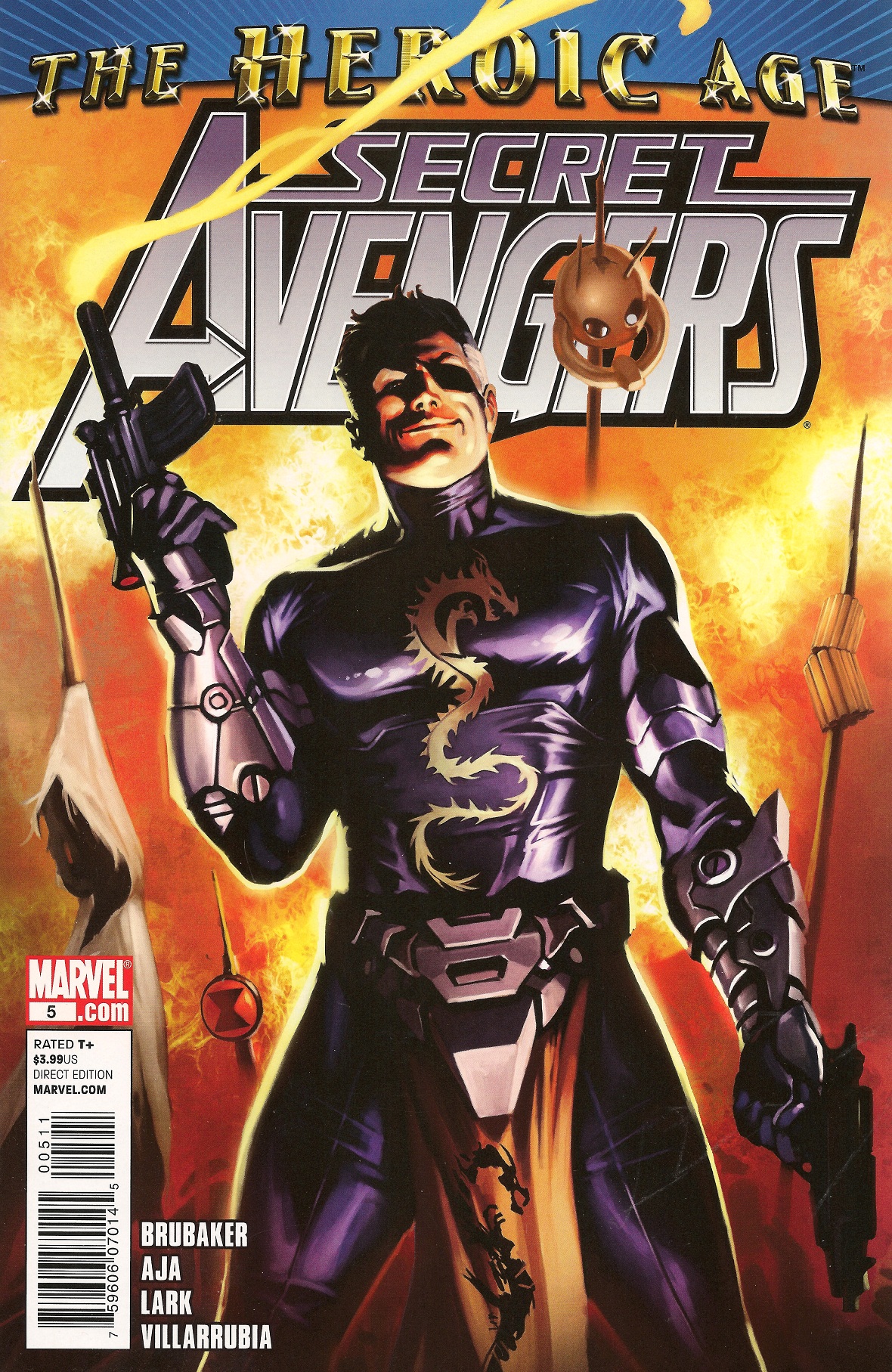
Secret Avengers Revisited
A few posts back I wrote about my disappointment with Marvel's new Secret Avengers title. One of the things that bothered me, which I don't think I mentioned, was the Nick Fury character. I couldn't understand why he was acting the way he was in the story as it seemed totally out of place. Granted, I don't keep up with all the events in the Marvel universe, but it seemed odd. Issue five cleared all that up and has redeemed the series for me.
Titled "The Secret Life of Max Fury," this stand-alone issue explains (maybe -- you know how these things go) just why Mr. Fury seemed to be acting out of character these past few issues. In fact, the story goes back about ten years to explain these things. And while it was no action-packed fisticuff orgy, it was a highly interesting story (which some totally fitting art by David Aja, who is fast becoming one of my favorites) of intrigue and suspense that sets the stage for future stories that seem like they could be incredibly promising. At this point I'm glad I gave the book a chance, as I get the feeling I would be missing out on some prime Avengers stories had I dropped it.
Of course, everything could go wrong and writer Ed Brubaker could be replaced for some reason and all his storylines handed to an intern. That would be disaster, but we all know things like that happen in the world of comics. Hopefully, for the sake of this title's fans, that won't be the case here.
Titled "The Secret Life of Max Fury," this stand-alone issue explains (maybe -- you know how these things go) just why Mr. Fury seemed to be acting out of character these past few issues. In fact, the story goes back about ten years to explain these things. And while it was no action-packed fisticuff orgy, it was a highly interesting story (which some totally fitting art by David Aja, who is fast becoming one of my favorites) of intrigue and suspense that sets the stage for future stories that seem like they could be incredibly promising. At this point I'm glad I gave the book a chance, as I get the feeling I would be missing out on some prime Avengers stories had I dropped it.
Of course, everything could go wrong and writer Ed Brubaker could be replaced for some reason and all his storylines handed to an intern. That would be disaster, but we all know things like that happen in the world of comics. Hopefully, for the sake of this title's fans, that won't be the case here.
Subscribe to:
Posts (Atom)